The need: centralising and organising microphone kits and cables
An audiovisual technical service provider approached us to design a dedicated solution for organising their microphone kits at events and on shoots. This flight case was to complement their existing stand-dedicated flight case, and solve two recurring problems in the field.
The first is time wasted during dispatch: without compartmentalised organisation, sorting equipment at setup and teardown slows down the entire team. The second is the lack of visibility. Backstage, in the control room or on stage, ambient lighting is rarely sufficient to quickly identify the contents of a standard flight case.
The specifications were built around three priorities: compartmentalised storage to clearly separate microphones, cables and accessories; enhanced ergonomics enabling the flight case to be used directly as a workstation; and optimal visibility of the contents, regardless of ambient lighting.
The design: from field discussions to 3D modelling
Before drawing anything, our design office took the time to discuss the client's actual working methods: how they prepare their kits, in what order they access equipment on site, and what their transport and storage constraints are. It is this listening phase that determines the relevance of the final result.
The entire structure was then modelled in 3D using SolidWorks, allowing the client to validate every detail before production began.
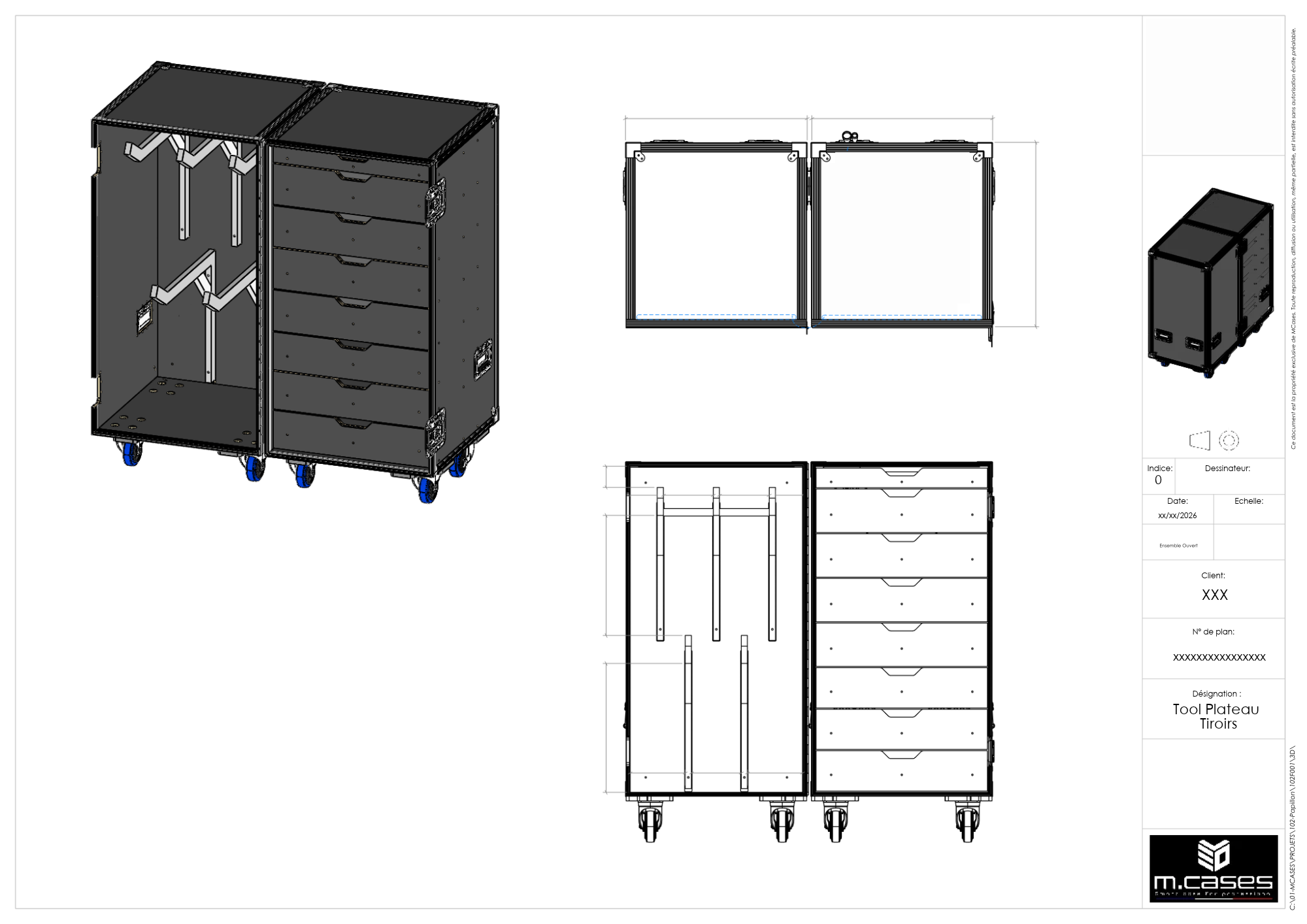
Dual compartmentalised storage. The interior space is divided into two distinct zones: on one side, cabling and accessories; on the other, microphones housed in drawers with custom-cut foam inserts. Every item has its place, identifiable at a glance.
Hinged opening with integrated worktop. The flight case separates into two parts via a reinforced hinge system. The top section has been specifically designed to transform into a stable and ergonomic worktop, usable directly by the stage manager or the on-stage technician.
Do you have a custom flight case project?
Built-in LED lighting, powered by PowerCON TRUE1. To address the visibility issue backstage, the flight case features an LED lighting system powered by a Neutrik PowerCON TRUE1 mains inlet. Once plugged in, the drawers and cabling section light up instantly.
Manufacturing: from the workshop to the field
Once the 3D model was validated, manufacturing began in our workshop near Rennes.
Panel cutting is carried out using high-precision CNC machining, followed by aluminium profile assembly, installation of reinforced hinges and full integration of the electrical network for LED lighting. Each flight case then undergoes a systematic quality inspection: opening test, worktop stability check and lighting function validation.
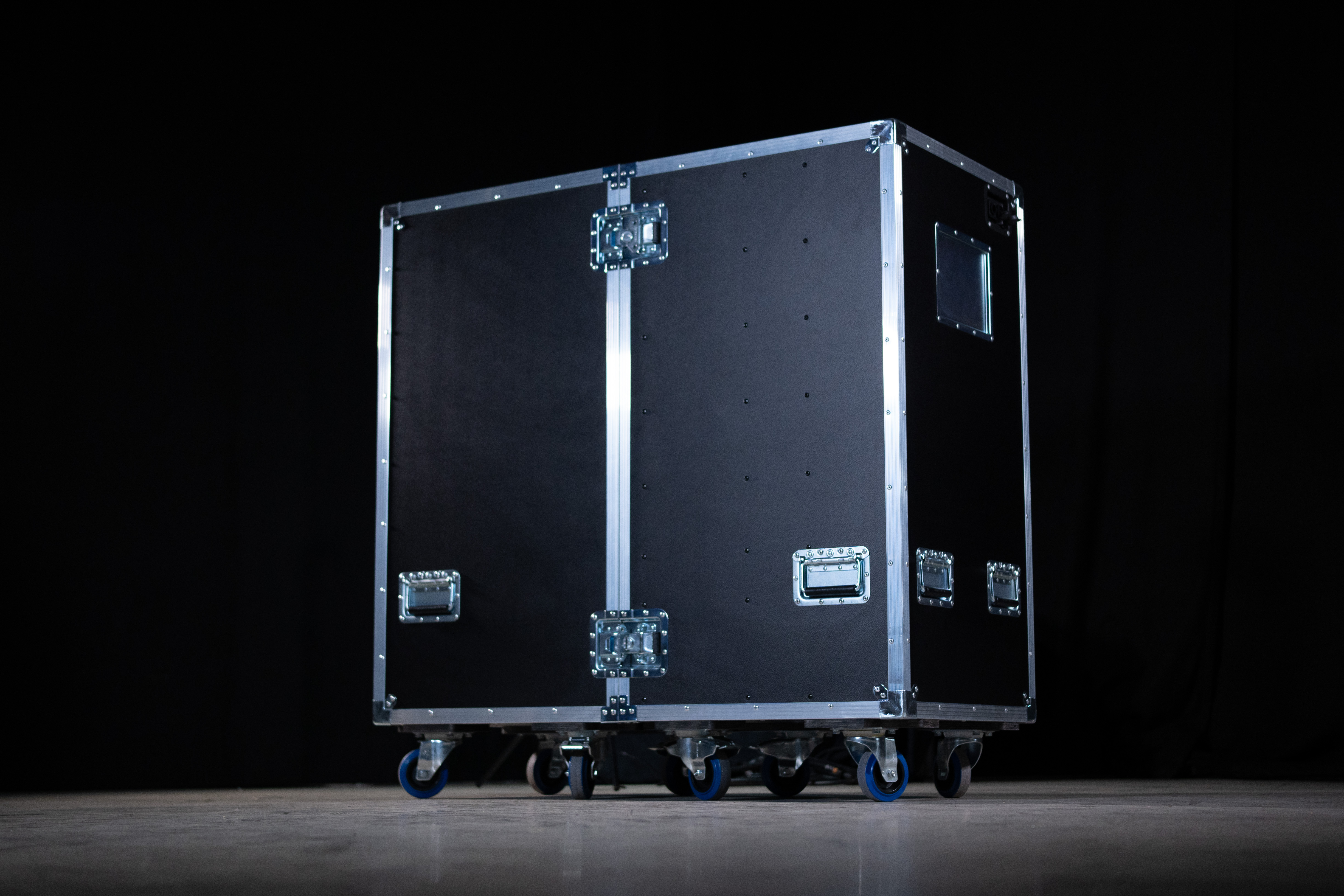
The Tool Micros flight case was delivered directly to the client, ready for their next assignments.
The result: a complete, self-contained work tool
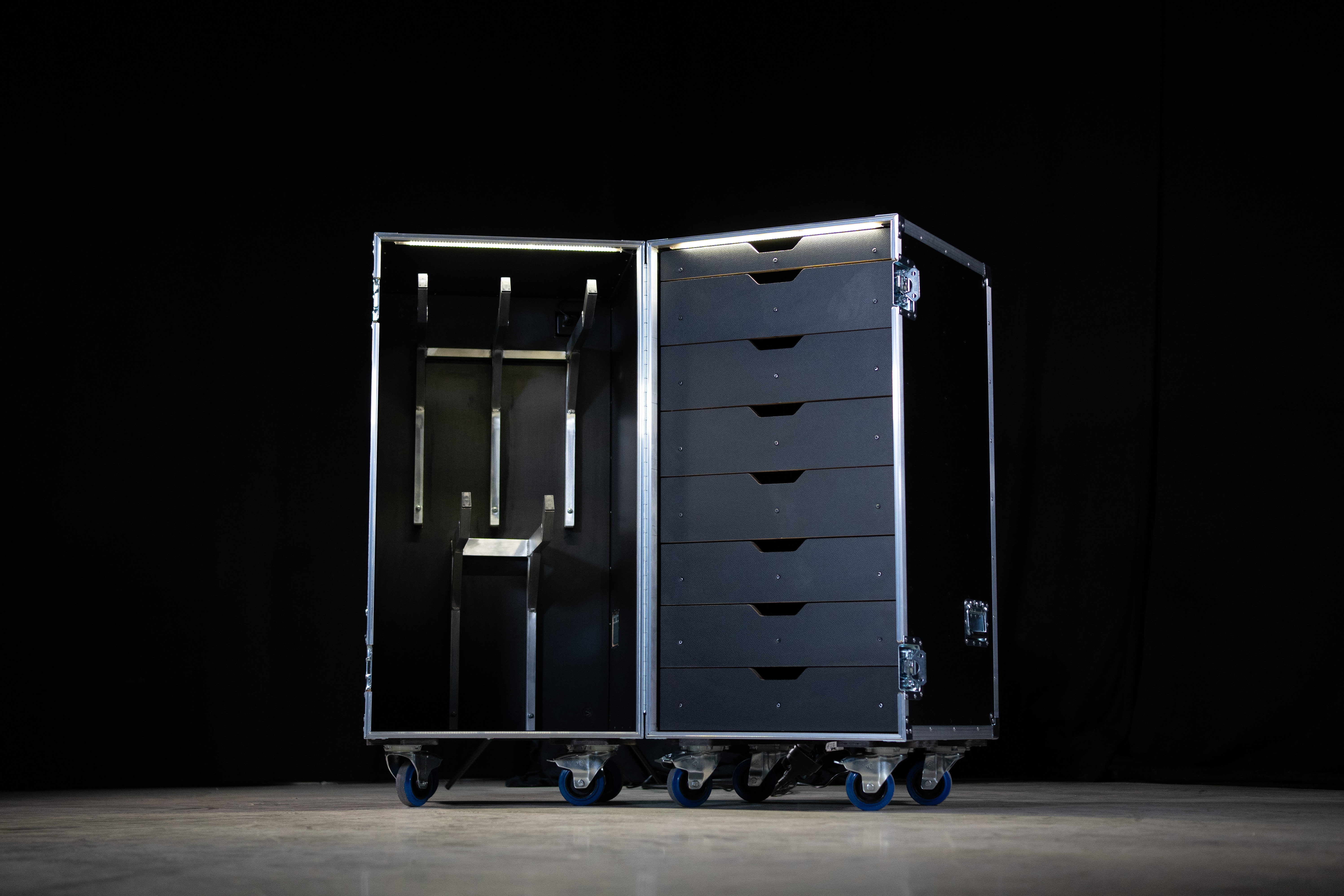
Thanks to this custom design, the service provider now has a flight case that goes beyond a simple transport container.
Time saved at setup and teardown. All the necessary microphones and cabling are centralised, organised and immediately accessible. Dispatch that used to take several minutes now takes just seconds.
Real working comfort for technicians. The built-in LED lighting eliminates the constraint of dim conditions backstage. The worktop provides a stable surface for preparing and checking equipment without having to search for a table.
A versatile tool. The flight case serves both as an ultra-rugged transport container and as an on-site preparation station. One object, two functions.
"This project illustrates our approach at M.Cases: a custom flight case should not merely protect equipment — it should become a genuine work tool for technicians in the field."
Do you have a custom flight case project?
From simple interior fittings to the integration of complex technical solutions (LED lighting, 19-inch racks, specific connectors), our design office turns your ideas into 3D before manufacturing.